

‘Oh my gosh, this cruise is going way too fast’ was the first thought I had when I woke up on 5 September 2008. The night before, I’d had a dream that we were back home in Australia. In the dream, I couldn’t work out where the last 5 days of our trip had gone.
This was actually quite common for me, at about the ¾ point of a QE2 cruise. I never wanted the trip to end.
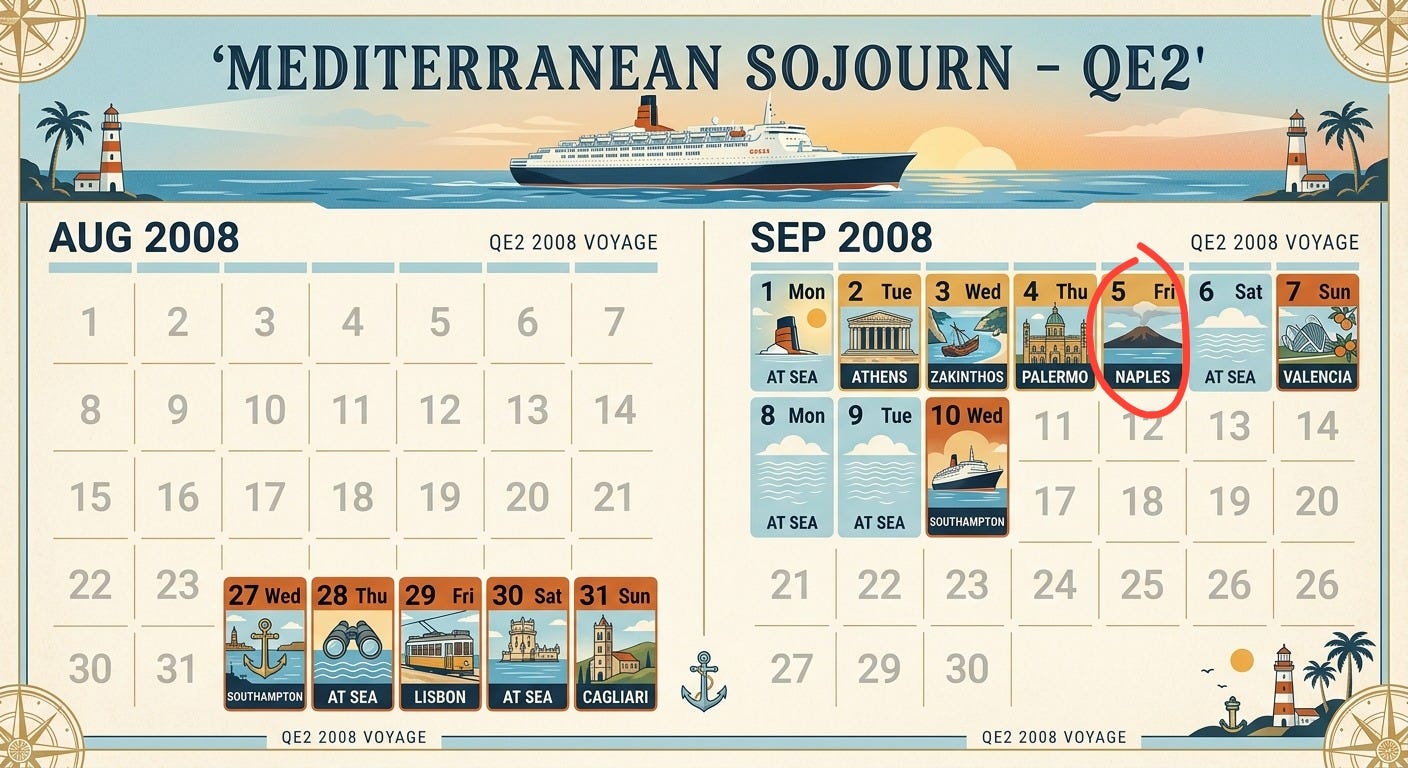
Luckily it was just a dream, but there was an element of truth to it. Time on this cruise was fast sailing away from us. In just a few days, we’d be saying goodbye to QE2 and her crew for the very last time.
But I put that out of my head as we got up to make the most of the day.


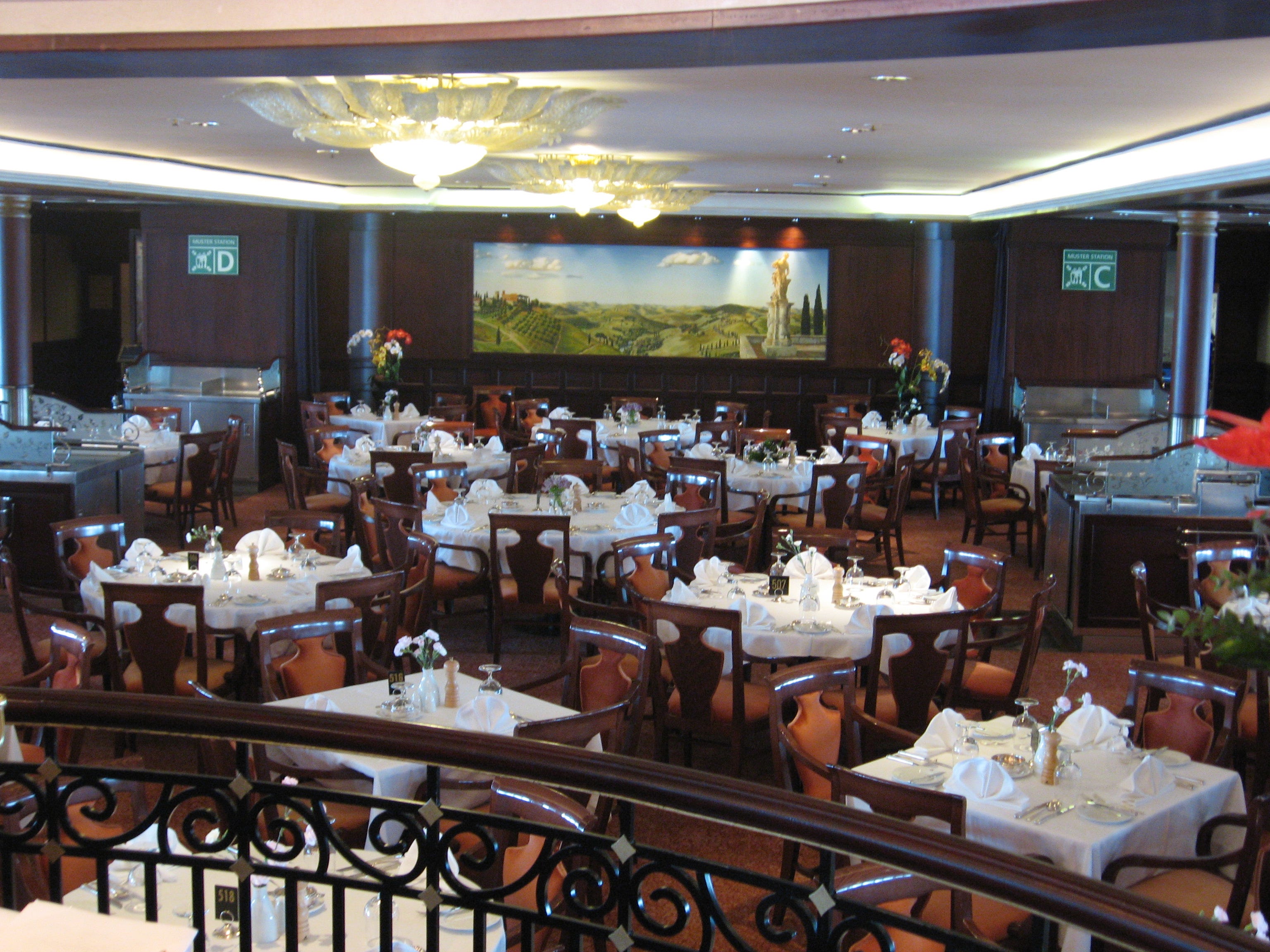
This morning we were up early, so we decided to take breakfast in the Caronia Restaurant. We were allocated to a table near the big windows, which allowed us a great view of Naples.
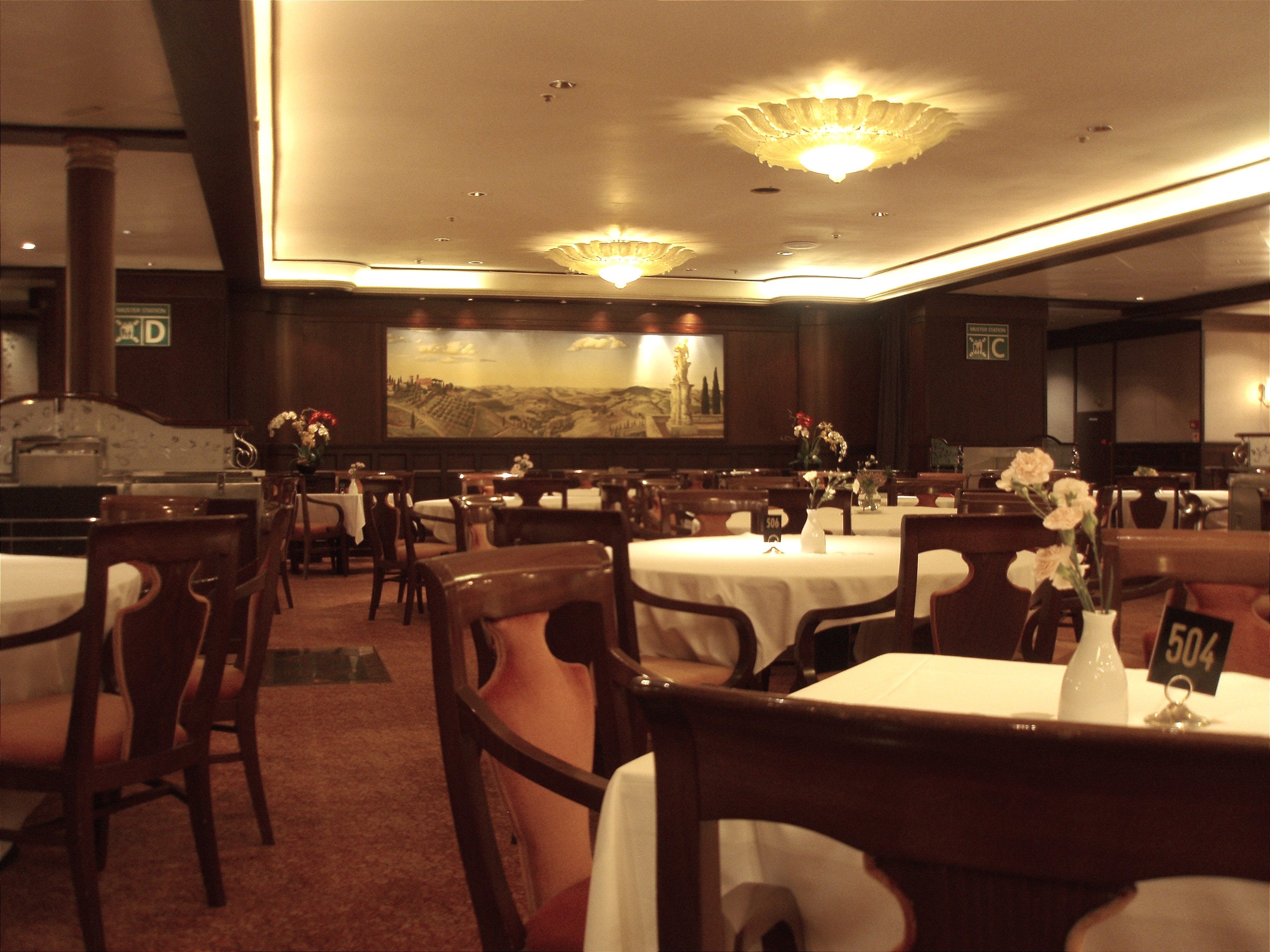
When QE2 entered service, the Caronia Restaurant on Quarter Deck was the main first class dining room aboard.
From 1969 to 1994 it was named the Columbia Restaurant. It was situated off the D Stairway and to access it, you’d need to walk up an elegant staircase and then down again, into the restaurant. For those who couldn’t make the stairs, there was a discrete side entry, into an area at the aft, port side of the room, that used to be referred to as the Columbia annex.
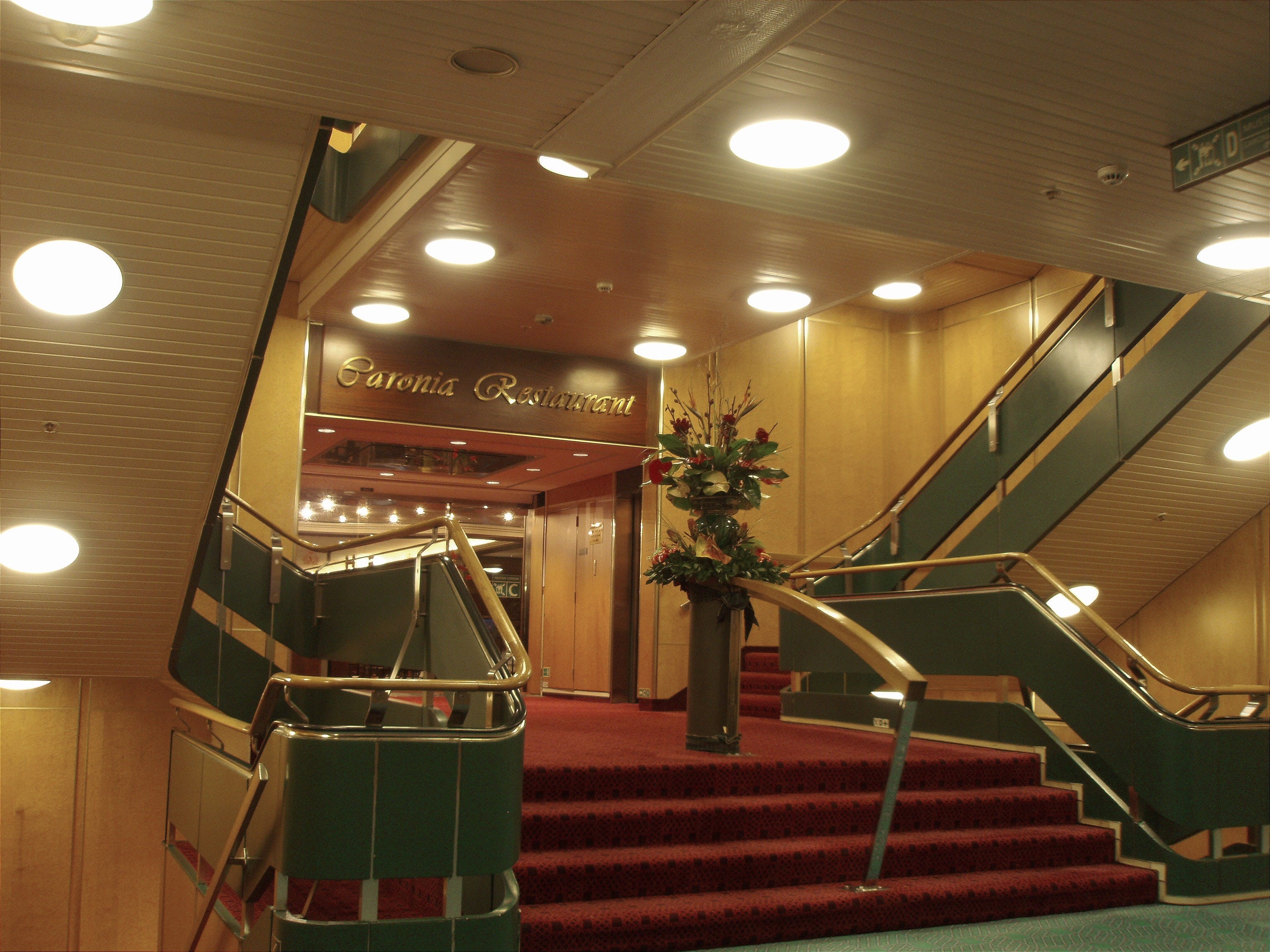
In 1994, during the Project Lifestyle refit, the Columbia Restaurant was renamed Mauretania Restaurant, and allocated to diners occupying M-grade cabins. This was how QE2 was set up on my first cruise as a child. During that voyage we dined in this Quarter Deck location.
The original Mauretania Restaurant had been on Upper Deck. During this same refit, it was rebuilt and renamed Caronia Restaurant, and set aside for those occupying C-grade cabins, who used to dine in Columbia.
The idea was to enable C-grade passengers to enjoy the fabulous new Crystal Bar, which had just been created on Upper Deck. From this bar, passengers could enter the new Caronia Restaurant, as well descend two new staircases to the Princess Grill and Britannia Grill.
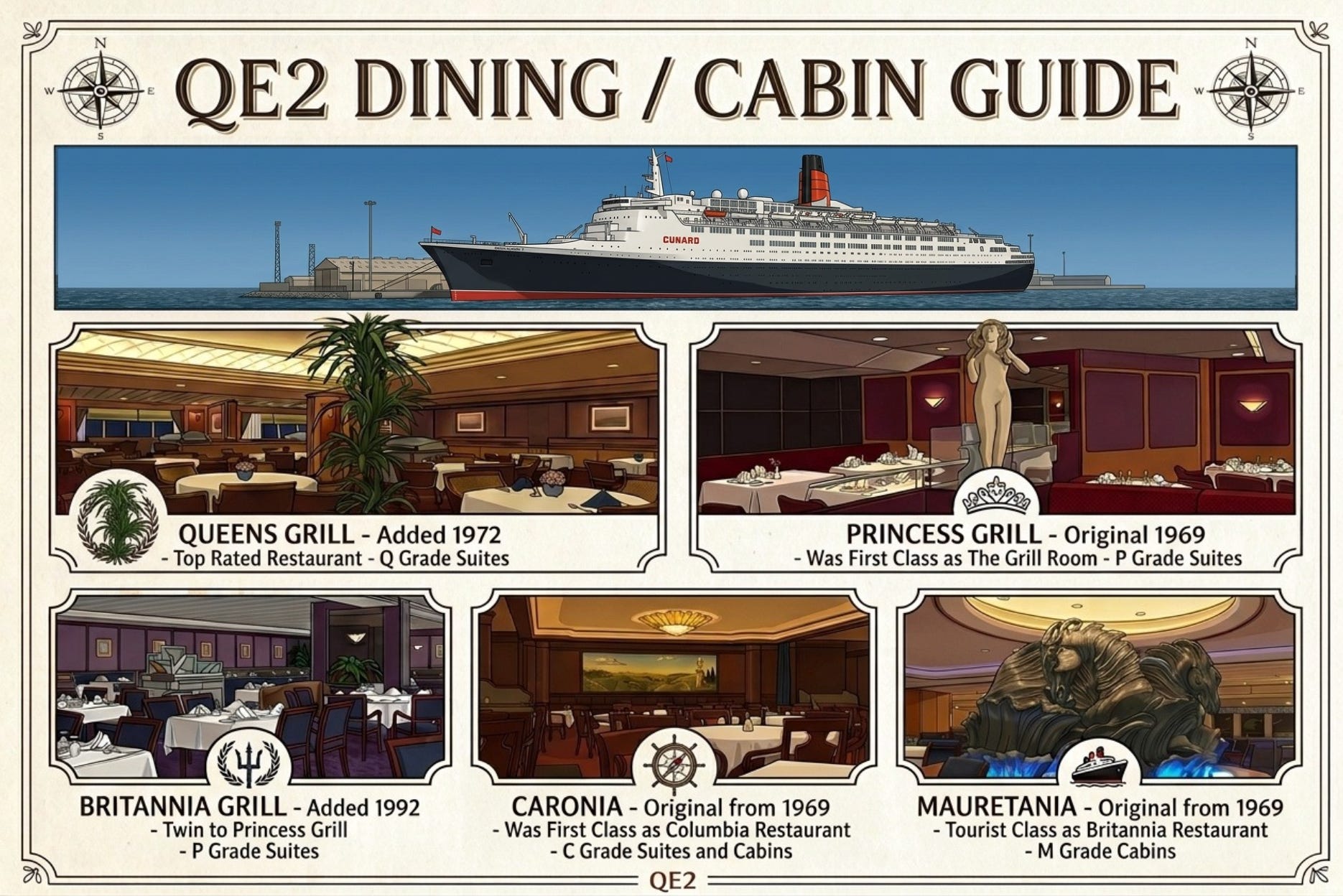
Prior to this 1994 refit, these three top class restaurants were each accessed from a different location, which was a bit confusing. So the architects of the 1994 refit felt that it would be nice for passengers of the high end Grills, as well as the Caronia Restaurant, to share this new bar as a place to mingle before dinner.
But what they hadn’t anticipated, was just how fond loyal, repeat passengers were of the Quarter Deck Columbia Restaurant. And it was located just forward of the Chartroom Bar. Since the ship entered service this smaller, intimate bar (then called Midships Bar) was known among the regulars as ‘the’ hangout for those in ‘first class cabins’.
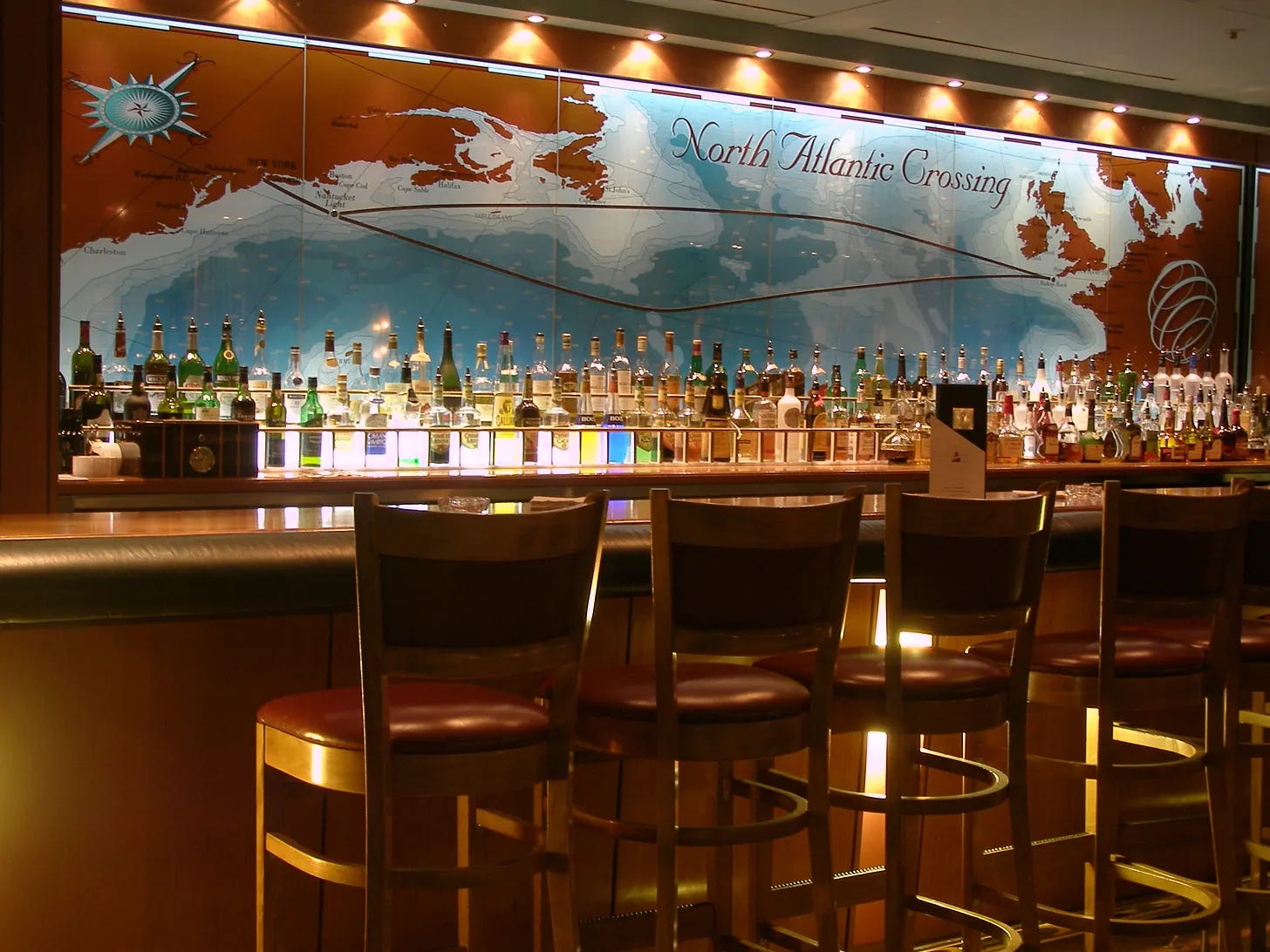
This reputation remained, even after QE2’s public spaces were opened up for all passengers to enjoy. So, in 1997 in response to overwhelming passenger feedback, the Mauretania Restaurant and Caronia Restaurant were swapped.
In 1999 the Quarter Deck location was given a massive overhaul, to install the Edwardian-inspired interior that we were experiencing this morning in Naples.
Today was going to be a big day, as we had a tour booked to visit Pompeii.
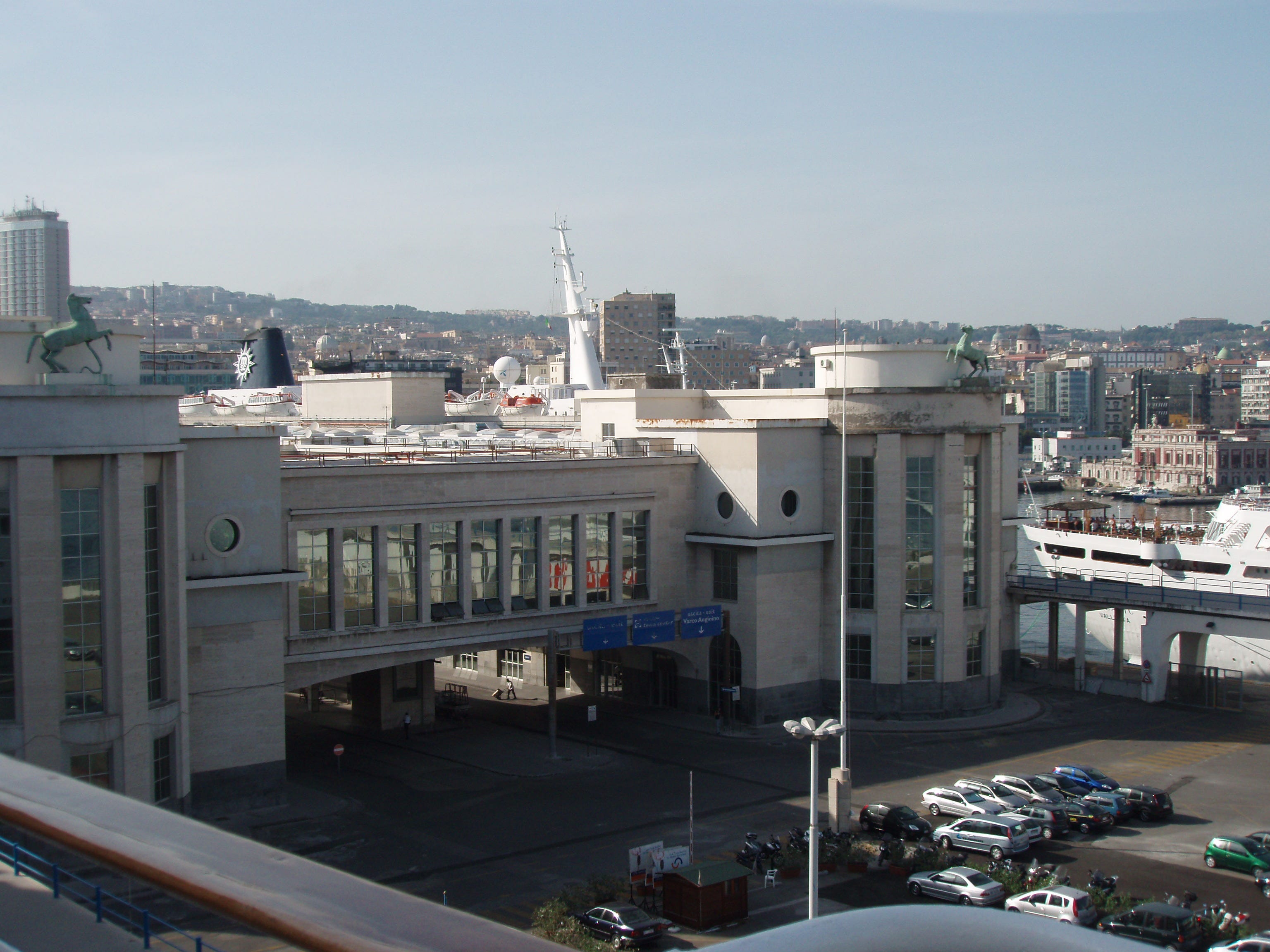
The ship had docked at the Stazione Marittima di Napoli, which is an example of Stile Littorio (or Monumental Rationalism) architecture. The building is imposing, and dates to the fascist dictatorship of Benito Mussolini.
Today it remains as one of the busiest cruise passenger terminals in the Mediterranean.
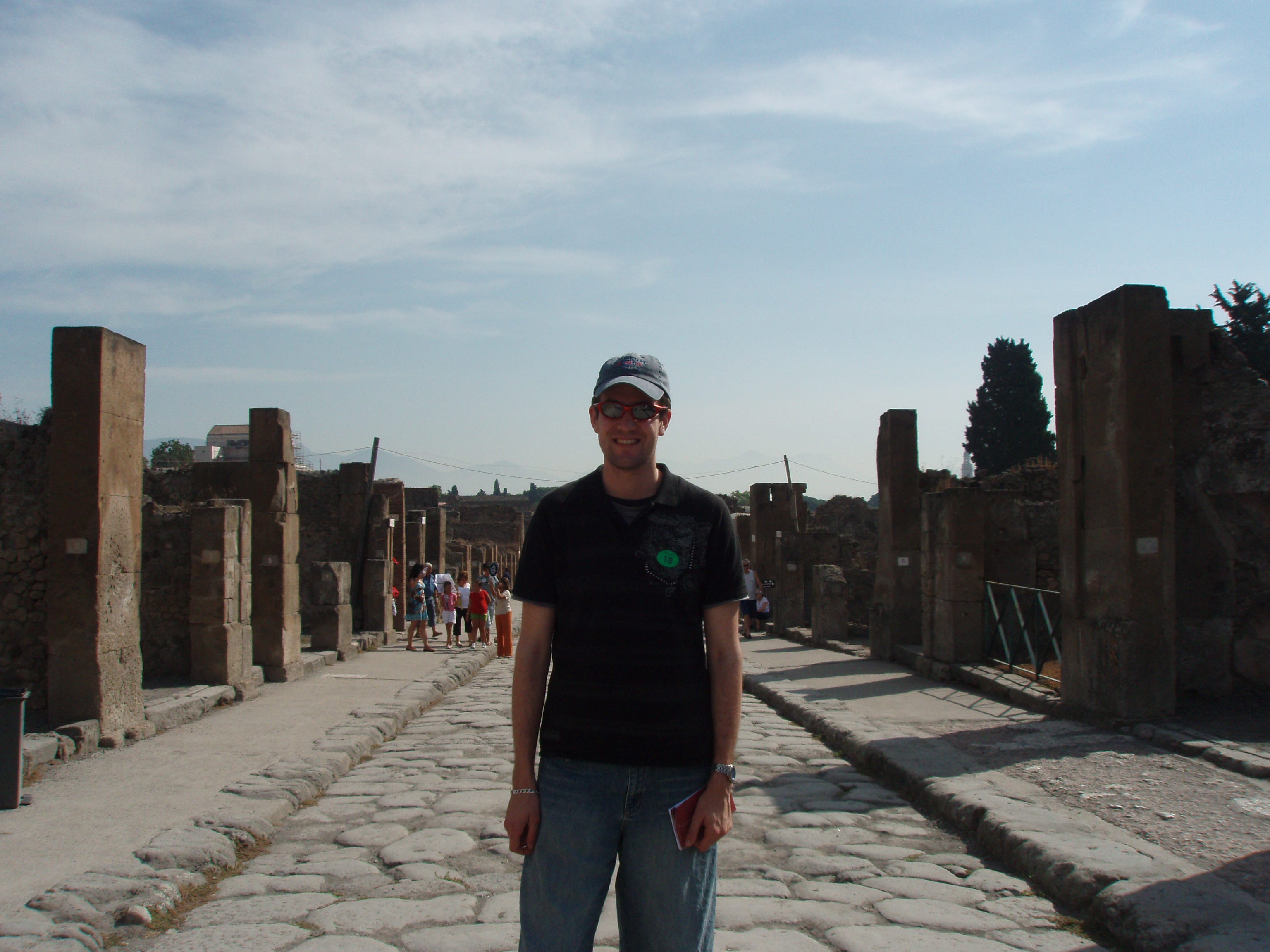
I cannot recall where we met up to check in for this tour, but photos show me that we were in group Green 18. What I do recall, quite vividly, is the bus ride out to Pompeii.
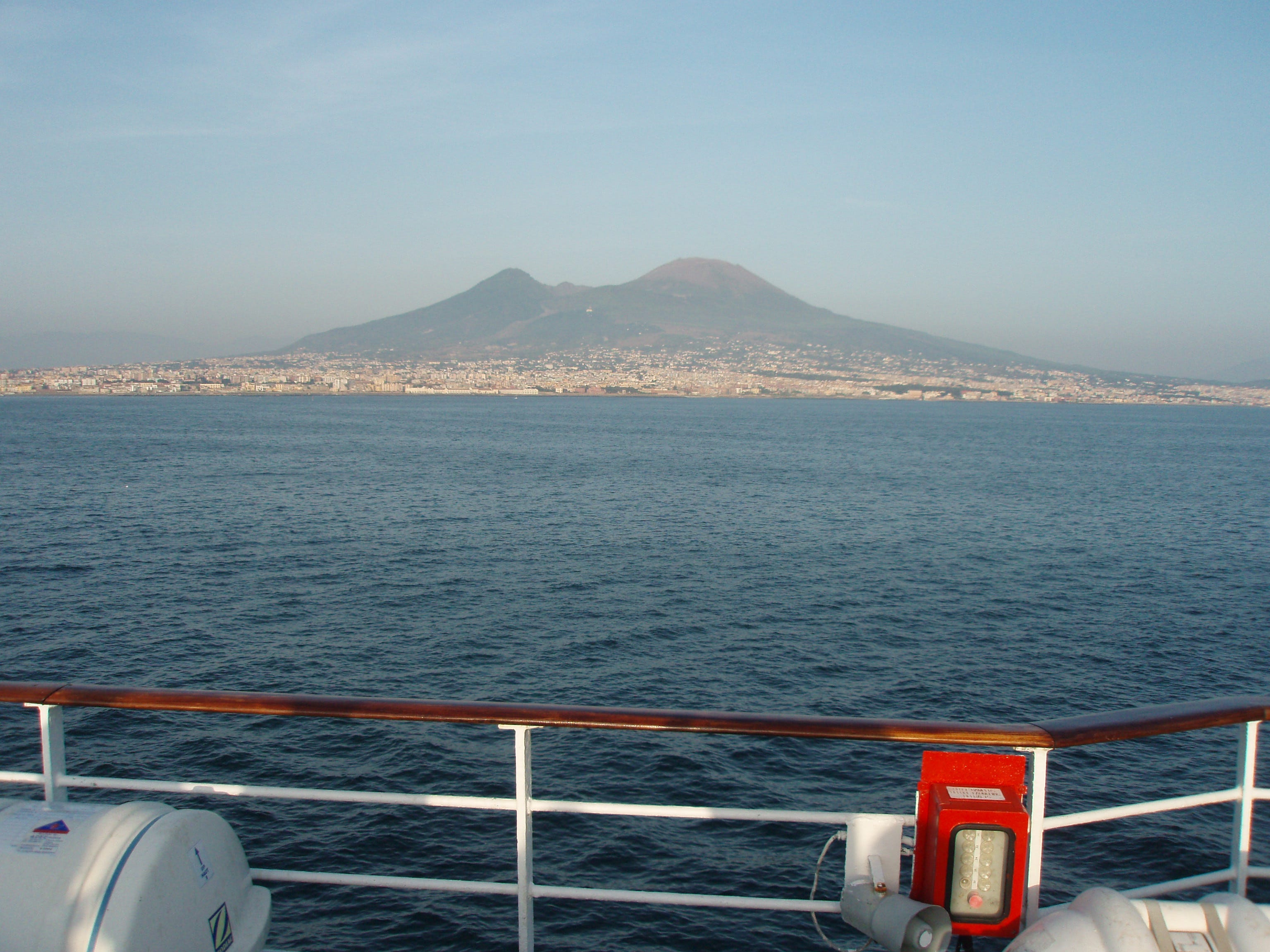
Naples is situated in the shadow of Mount Vesuvius. This is the very same volcanic mountain that destroyed Pompeii in 79AD. It is also widely acknowledged that Vesuvius, which is only 9.8km (5.6 miles) away from the city, is due another cataclysmic eruption in the next 100 years or so.
The tour guide on our bus shared this background information, and then, as we became stuck in traffic, he made a quip about the roadworks… along the lines of:
They have been working for years, and will finish the roads just before Vesuvius erupts again.
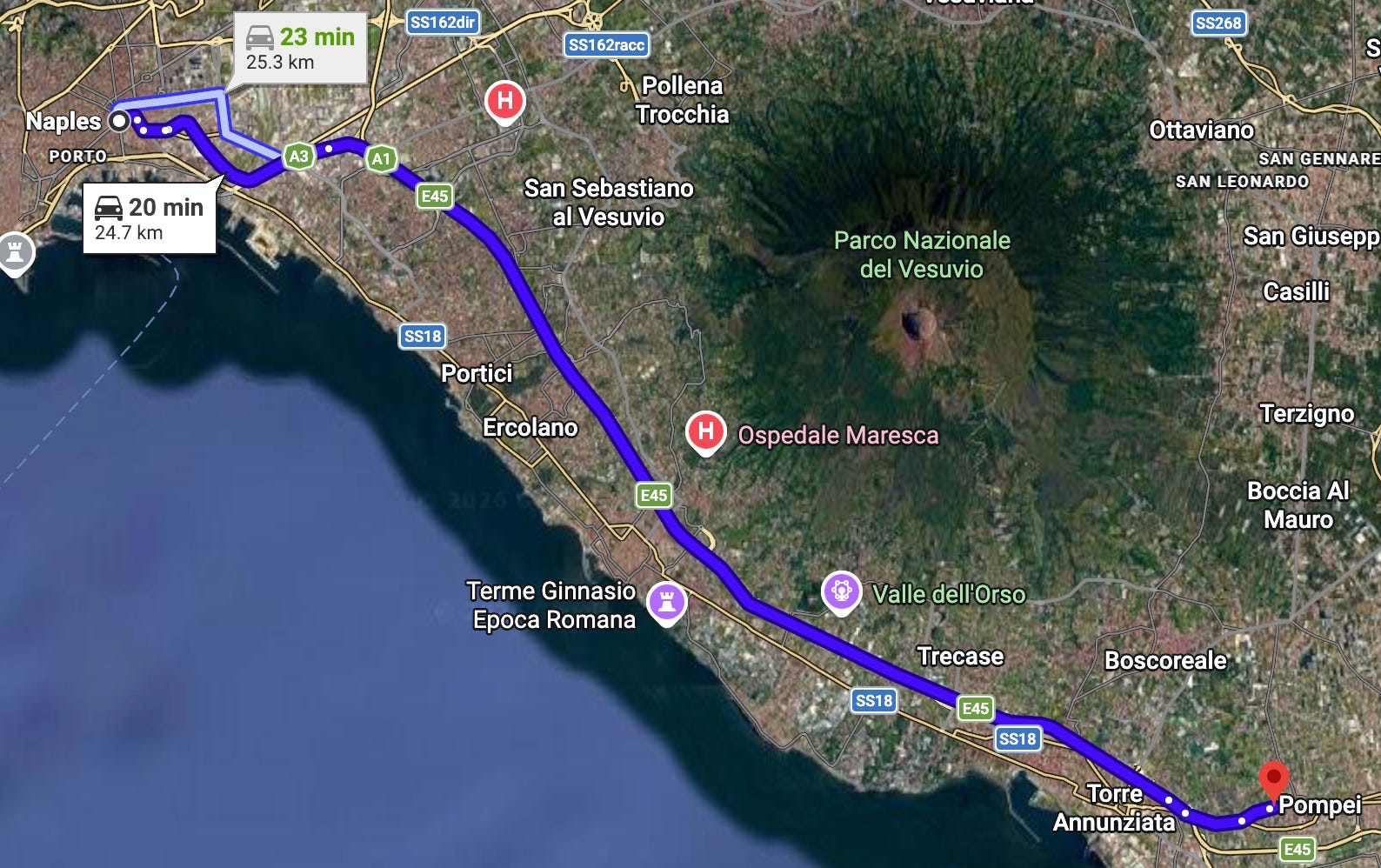
The bus ride left the city and headed towards Pompeii, skirting around the volcano that had destroyed the Ancient Roman city so long ago. In fact, revisiting this route on Google Maps it is remarkable to see just how much Vesuvius dominates the landscape.
Pompeii was fascinating. Neither Rachelle or I had visited before. The tour guide took us to see the various ruins. We learnt about the Ancient Roman plumbing, which used lead to dire consequences, and saw the frescos that Pompeii is so famous for.


Later in the afternoon, the bus took us back to the port, and we reboarded QE2 once again. On this day, the ship was sharing the pier with two other classic ships; one an ocean liner and the other a cruise ship.
The most visible was the SS. Oceanic. Built in 1965 at Cantieri Riuniti dell’ Adriatico, Monfalcone, for the Home Lines, this ship was an absolute beauty. Like QE2, she was a dual-purpose liner, designed for the transatlantic service in the summer, and cruising in warmer climates during the winter.
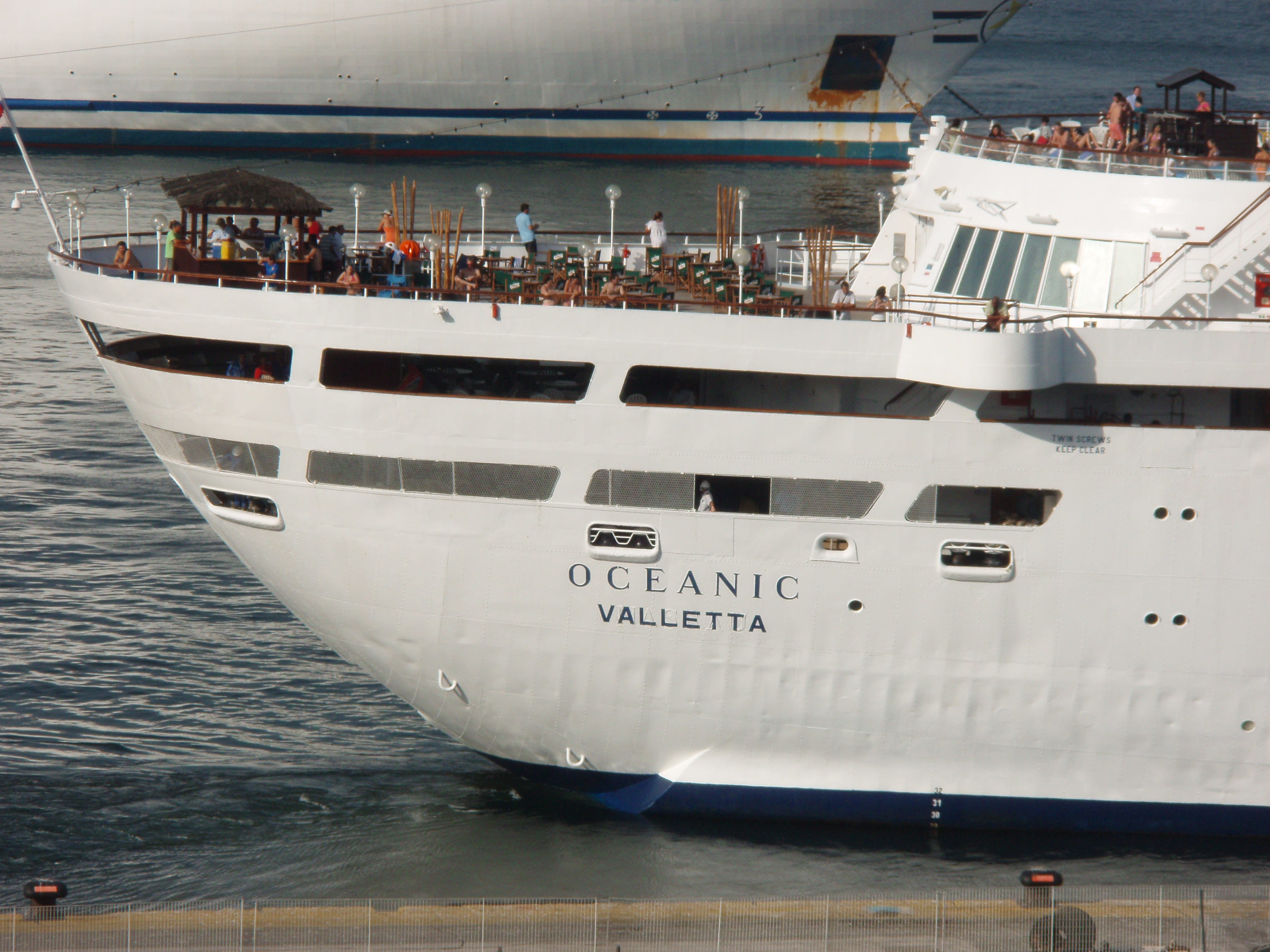
Her lines were almost as impressive to me as QE2’s. She featured a gorgeous long bow, a sculpted superstructure and a Costanzi stern, which blends the cruiser stern’s curves with the waterline-functionality of a transom stern.
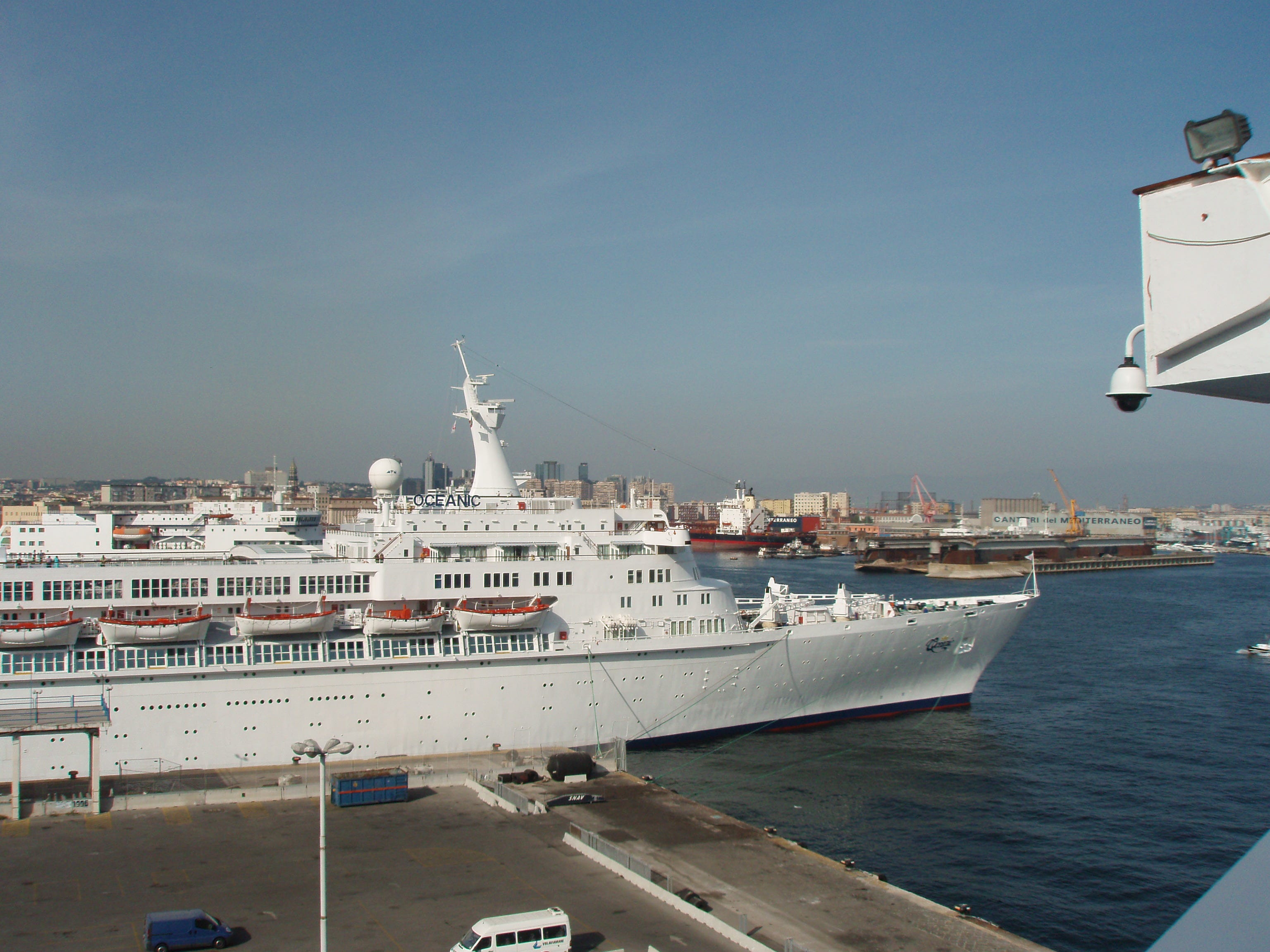
In fact, Dr. Stephen Payne (designer of QM2) would later tell me that this ship was the inspiration for the QM2’s Costanzi stern. Though on the smaller Oceanic it appeared possible for the designers to hide the transom far more than what could be achieved on the much larger QM2.
At this stage in her career, Oceanic was sailing for Pullmantur Cruises, which went defunct during the 2020 Pandemic 12 years later.
The other ship alongside was the Melody. She was also built for Home Lines, by the CNIM shipyard in La Seyne, France. When she entered service she was called Atlantic, but only dated to 1982.
The ship’s design was never really considered a great success, and after Home Lines was sold to Holland America, the ship was offloaded to Premier Cruises, and then later to MSC.
Sadly, both of these classic ships have since been scrapped. Melody I can understand, given she was always a bit of a white elephant, but it is a real shame to have lost Oceanic, given how long her career was and how pleasing her lines were.
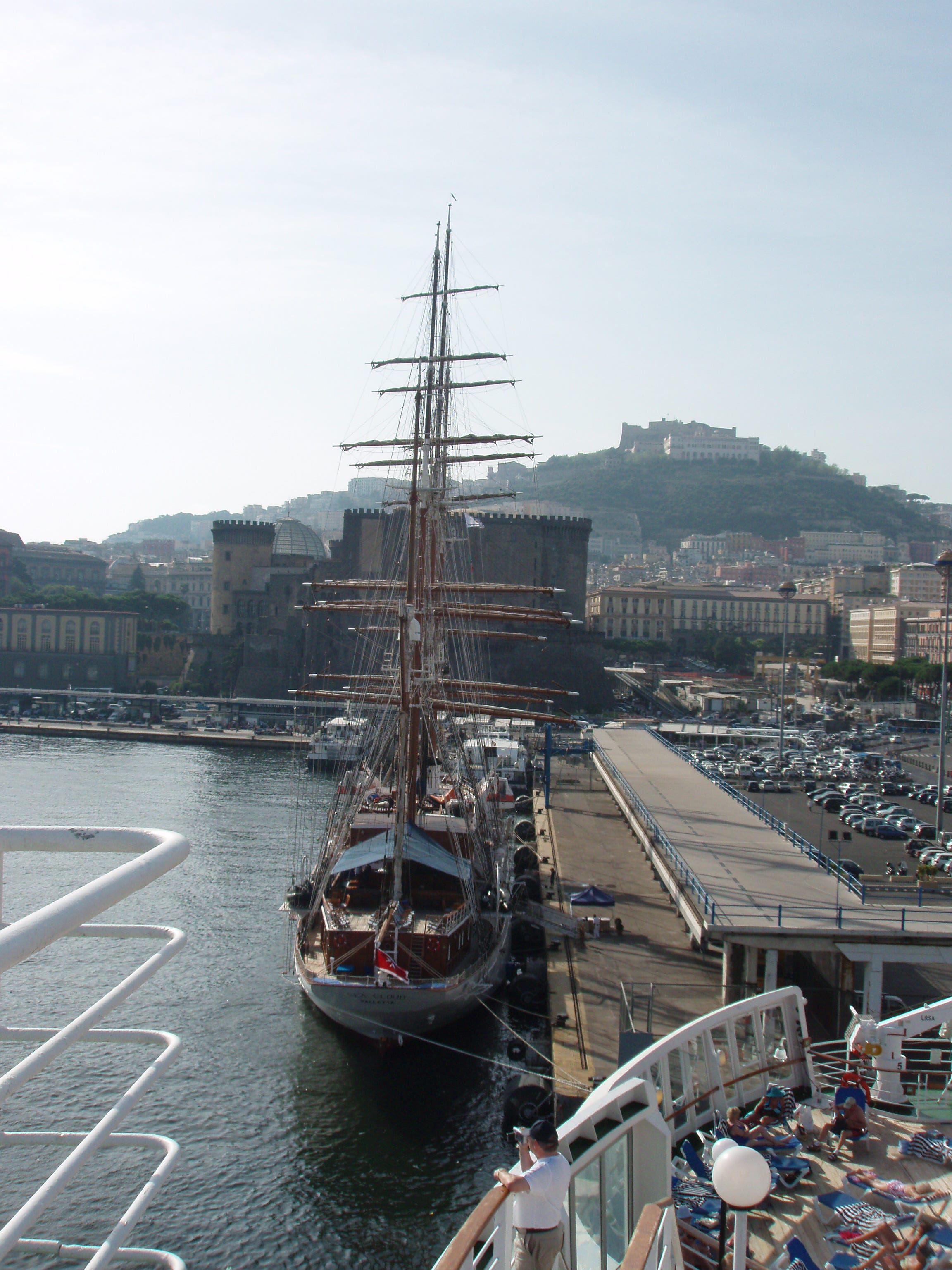
As the afternoon continued, the iconic sailing vessel Sea Cloud arrived in the harbour. Sea Cloud was built in the 1930s and served as a private yacht, a US Coast Guard ship and Naval vessel and even a presidential yacht for the President of the Dominican Republic.
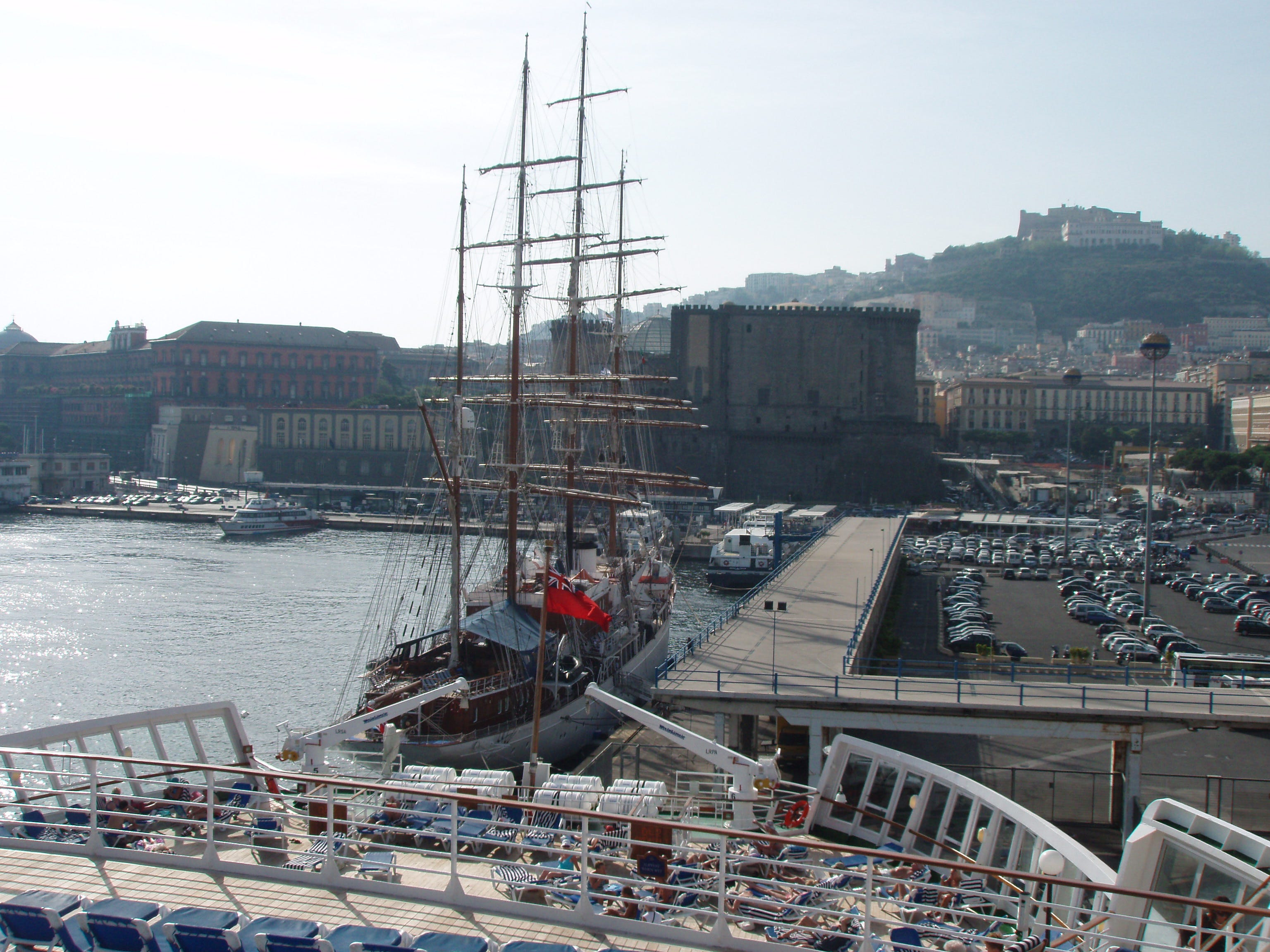
Sea Cloud docked aft of QE2. I recall Rachelle commenting that she’s finally seen a ship that matches QE2’s beauty as the smaller ship sailed past.
As we neared our own departure time, the SS Oceanic was also preparing to sail. We found a spot on the port side of QE2 to watch the elder ship make way.
Because QE2 had very few balcony cabins, nearly everyone was up on deck during sail aways. This created a memorable atmosphere, and encouraged passengers to walk the decks, take in all the sights, and chat to fellow travellers.
Now, I like a private balcony as much as the next person. But I really do think we have lost something in the design of modern cruise ships.
Cruising, after all, is at its best when the people onboard create a community at sea. It is much rarer to have such an electric atmosphere on newer ships, when everyone keeps to themselves during key events such as port departures.
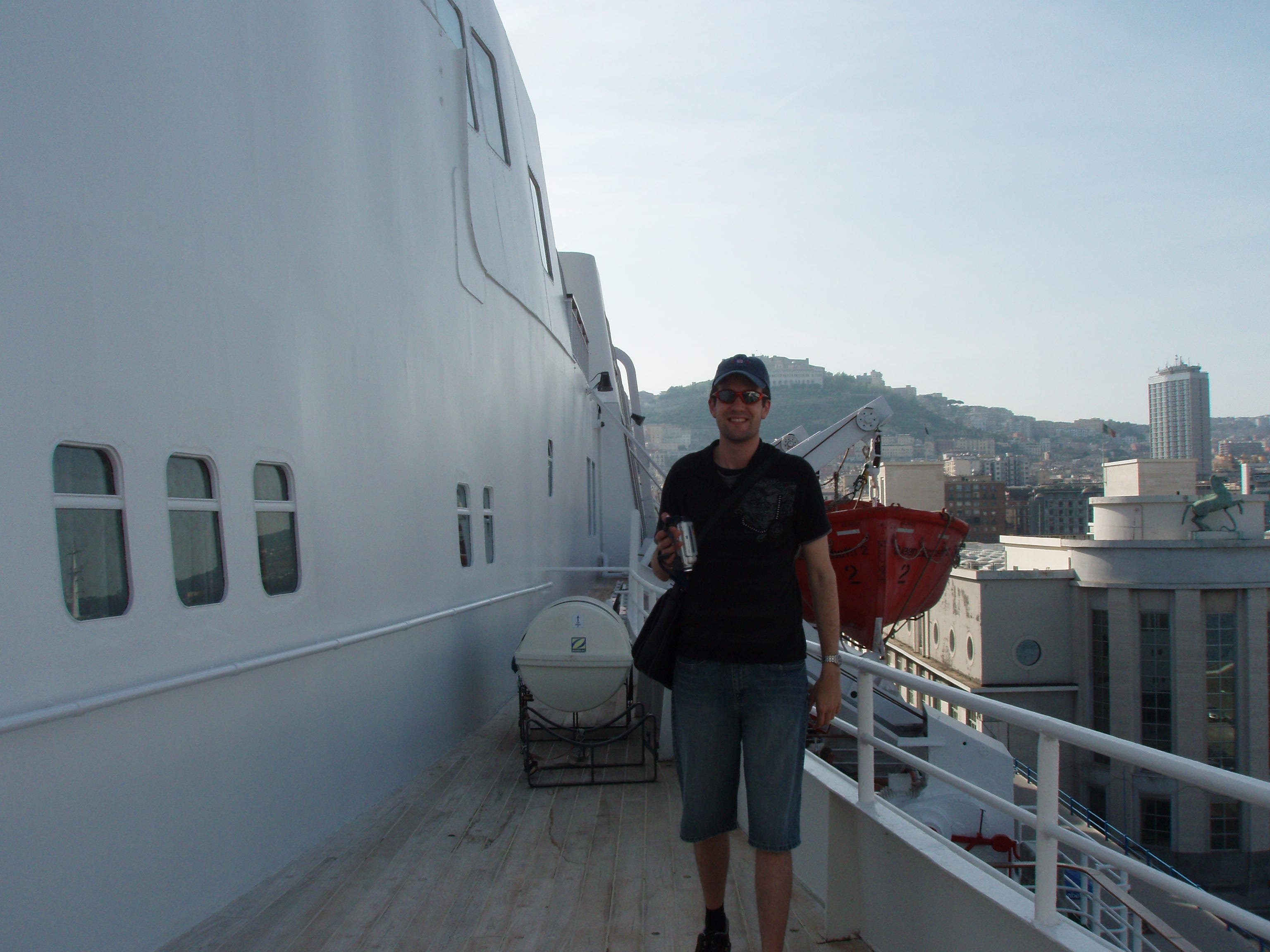


We moved around the ship from the terraced aft decks to Boat Deck, and up to Sun Deck. Again, I must have been video taping this as I am carrying my Dad’s old VHS-era camera. But I can’t for the life of me recall where I put those tapes 18 years ago!
Watching Oceanic depart was extremely rewarding. She was a beautiful ship. She outshone most of the other cruise ships in service in 2008, in the same way that the Empire State Building outshines 432 Park Avenue in New York.
There is just something so special about a structure, be it a ship or a building, where the architects really care about the external appearance.
It’s as if ships like QE2 or Oceanic were acknowledging that they’d be seen in many beautiful ports, islands and oceans and as such, made an effort to ‘dress nicely’ so as not to insult their host.
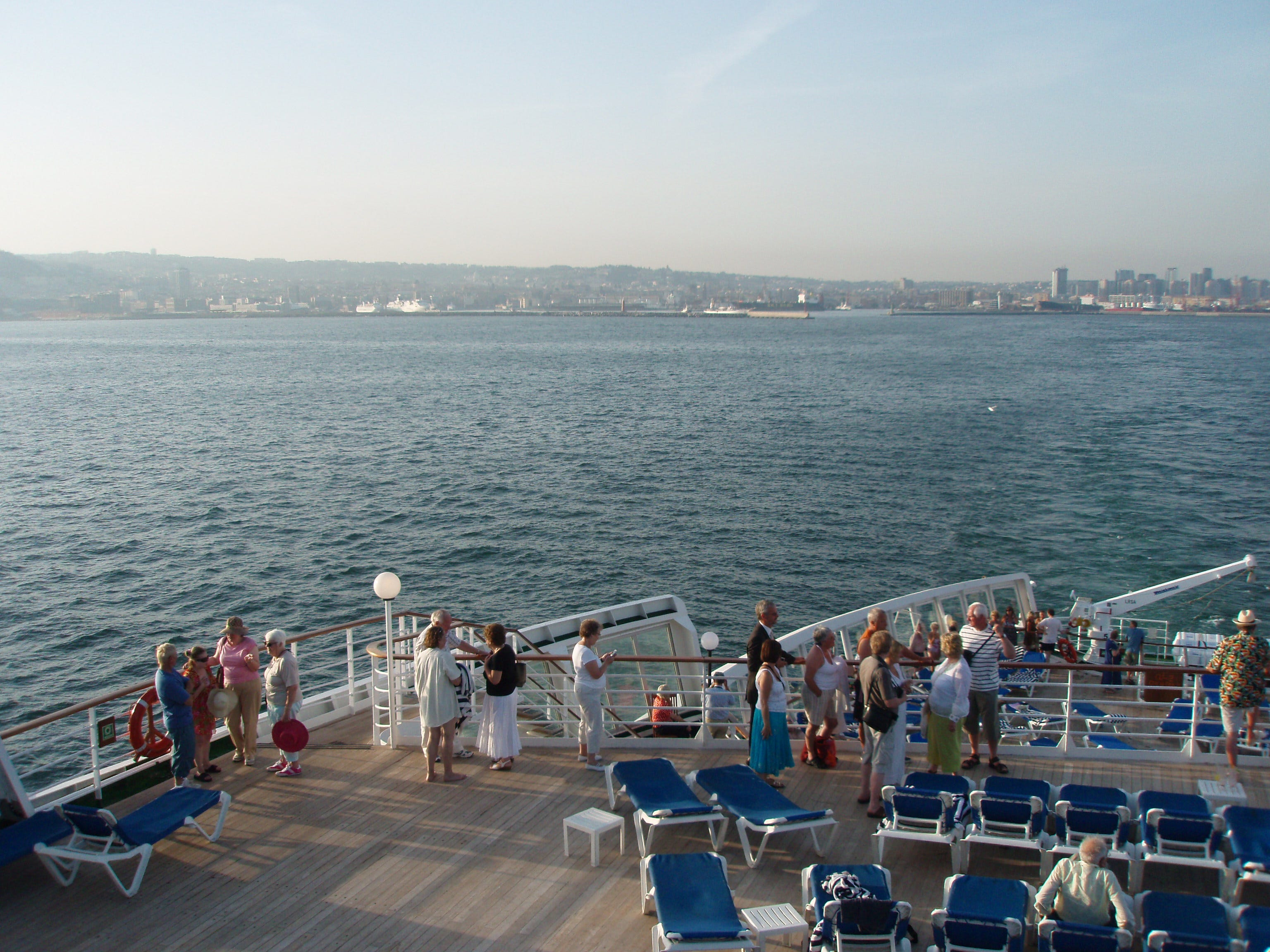
Soon it was our turn to depart. Like Oceanic, QE2 had been turned to face bow out. And so with lines let go, and a flurry of support from three tugboats, the ship made its way out to sea once again.
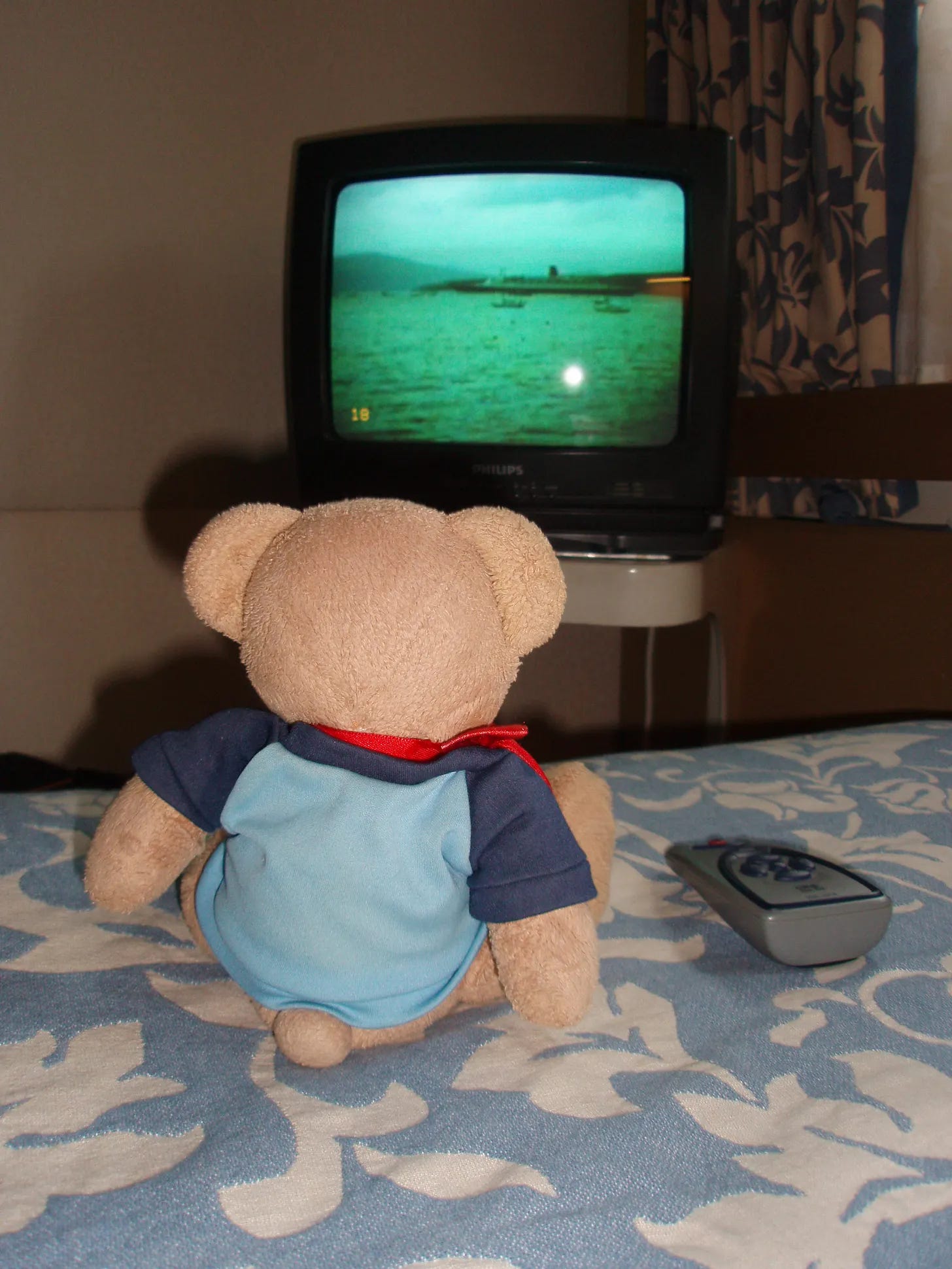
When we returned to our cabin, we saw that our fabulous cabin attendant had made it up for the day while we’d been ashore. And evidently, one of our little travelling companions had spent the day watching QE2 documentaries on the TV!
That evening we headed to the Crystal Bar for drinks. Even though we were dining in the Caronia Restaurant, we much preferred the Crystal Bar. It was non smoking, while the Chartroom was not, and having always sailed in Mauretania-grade before, it felt like home.
We then met our fabulous table companions for dinner, where we shared stories of our respective shore tours, interwoven with more of Derek’s hilarious jokes.
Had to peer at the Oceanic to make out her old port of registry, Nassau?
Sounds like September 5th 2008 in Naples was another good day both on and off QE2.
So many vessel spotting opportunities:)
Glad you were able to visit Pompeii, have you returned since?
In April this year, we opted for Herculaneum which is a more compact site and closer to Naples port.
Was a very interesting experience, we also had a good guide, did feel quite emotional thinking of what happened in that tragic far off year.
Looking forward to tomorrow's Substack article and reading what happened on September 6th, 18 years ago, onboard QE2.
Thank you for sharing your experience of such a significant trip, Chris.